Independence, Missouri
The StaircaseIndependence, Missouri, is the home Lizzy Enders must leave for the journey west, and the measure by which she understands what that departure costs. Its family house, familiar streets, and open-door hospitality belong to an earlier life with Mama; after the family’s circumstances change, Independence becomes both a place she longs to return to and a reminder that home cannot simply be recovered by wishing for it.
Family and the household
Mama was a member of the Bent family, whose standing in Independence rested in part on the wealth of her father, a fur trapper. He had three Indigenous wives; Lizzy remembers having met the last, Grandma Adalina, a Blackfoot, at the time of her grandfather’s death. She knows that she has Cheyenne and Blackfoot cousins she has never met. Her family history therefore gives Independence a wider reach than the town itself: it connects her to relatives and histories that remain largely beyond her knowledge.
The house in Independence had belonged to Uncle William. Mama ran it for him while he was away on adventures, and when he returned his visits could bring friends from Bent’s New Fort and gifts for the household. He had brought Lizzy her pony, Ben. Because Uncle William was often absent, the house was mostly occupied by Lizzy’s immediate family, but it remained his home as well as the setting of their daily life. Lizzy remembers its comfort alongside the excitement of his returns, making the household feel at once settled and open to the wider world he travelled through.
A home built around Mama
In Lizzy’s memories, Independence is inseparable from Mama’s activity and attachments. Mama grew roses in the garden, started a women’s literary guild, and baked cakes for church fairs. She had a brother’s home, a church, friends, and the women with whom she shared literary interests. When the family planned to leave, Mama did not want to abandon those ties. Her grief at the prospect of going west was part of the family’s departure, not a later embellishment to Lizzy’s own loss: Mama cried, and Lizzy cried with her.
The town also stands for the ordinary pleasures Lizzy expected to keep. Its tree-lined streets, stores, and steepled brick courthouse form a familiar landscape, while the passing emigrant wagons brought a sense of movement through a place that was still home. When wagon drivers announced their arrival by firing guns, townspeople came out to greet them. Sometimes a weary travelling family was taken in for the night. The contrast is important to Lizzy’s recollection: Independence was not only a refuge for her own family but a place where hospitality could be extended to strangers on the road.
Loss of security and departure
The family’s move followed a collapse in their former circumstances. After the American Civil War, Lizzy’s account connects the loss of the family plantation to Sherman's General Order No. 15. Mama and her father went to Independence, where Mama’s family gave him work in their mercantile. They lived in the large house with a porch running all the way around it. Yet employment and shelter did not restore her father’s sense of security. He felt cast down because he could no longer keep a roof over his family’s heads.
A robbery at the store sharpened that decline in the family’s eyes. A gunman held her father up; he had refused to use a gun since the war, and the robber escaped. Uncle William was disappointed that her father had not stopped him. Lizzy, by contrast, had hoped the robber would be Jesse James, whose notoriety would have made her the envy of girls in town. The episode ends that childhood fantasy on a smaller, more painful note: the robber was not the famous outlaw, and the house in Independence was never quite the same afterward.
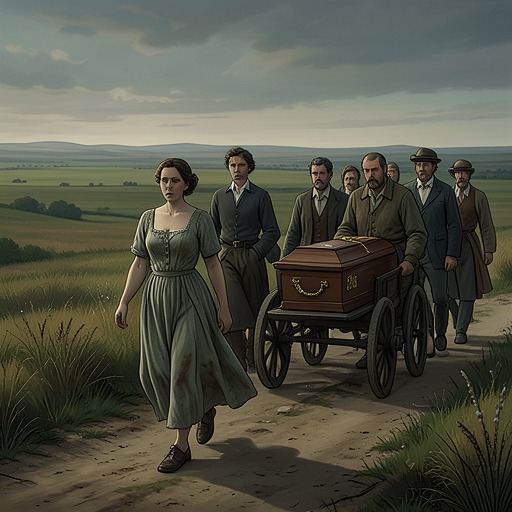
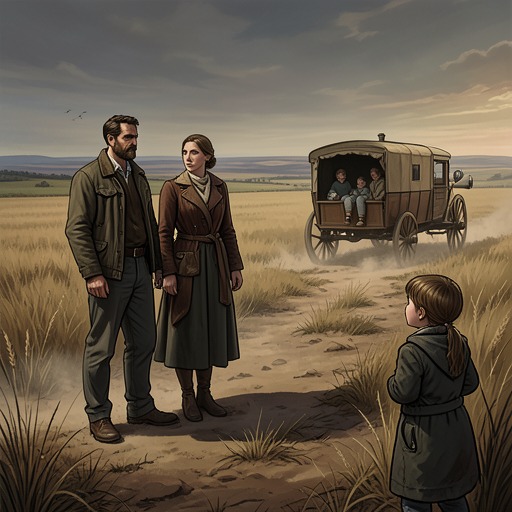
Her father finally decided that the family had to go west to seek gold in Colorado’s hills. For Mama, leaving meant separation from her brother’s home, her church, her friends, and her literary circle. For Lizzy, the move also meant leaving Cassie, her best friend, whose mother was expecting a baby. The girls had imagined caring for the child together, and Lizzy had long wanted a little sister. As the wagon departed, Cassie ran after it and handed Lizzy a paper; Lizzy reached over the tailgate and caught it. Cassie told her not to open it until she was lonely. Once Cassie had dwindled to a speck in the dust, Lizzy opened the paper and found Cassie’s reward poster for Jesse James, issued after he robbed the Missouri-Pacific Railroad of more than fifteen thousand dollars. The poster carried a piece of their shared life west with Lizzy, but it could not undo the separation.
The town remembered from elsewhere
Later, Independence persists through absence, letters, and the objects sent from it. In a letter to Uncle William, Lizzy wishes she were with him at home in Independence rather than in the convent in Santa Fe. Her appeal makes the old home sound like the alternative to her present loneliness, though she also knows that mourning Mama does not relieve her grief. In another moment, she measures the rapid change in her life against the memory of being with both parents in Independence only three months earlier, when Santa Fe had been merely a possible journey discussed around the table.
Uncle William’s later offer confirms both the town’s continuing emotional importance and the limits of what it can provide. He is closing his house in Independence for a time to go to Kansas with his friend Jim Bridger, and says Lizzy may join him once he has established a proper home. He needs at least six months to prepare. Lizzy understands that the invitation is sincere, but also recognizes the irony: the independence she loves in her uncle is part of why he is not available to her now. For Christmas he sends books, writing paper, a silver frame containing a photograph of her parents taken in Independence, and an Indian blanket. The photograph preserves a concrete image of the family’s life there, while the books and paper offer a connection that can travel even as the household itself disperses.
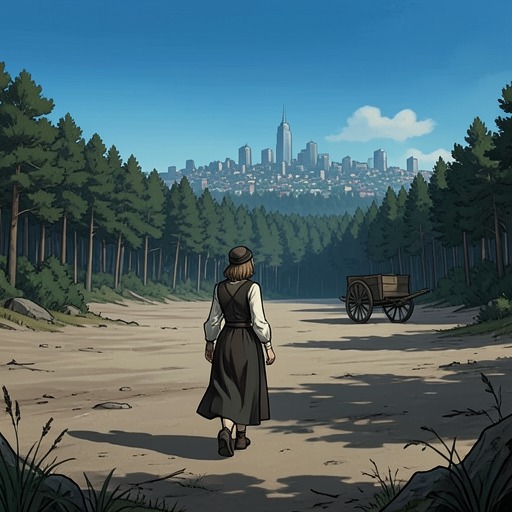
Independence thus remains more than the point of departure on Lizzy’s westward journey. It holds together her memories of Mama’s work and friendships, her father’s lost confidence, her uncle’s unsettled life, and the friendship with Cassie that she feared would end when the wagon left. Its remembered hospitality contrasts with the isolation Lizzy later experiences, while its family home becomes a promise that is real but delayed. The place shapes her sense of what has been lost without making return, or reunion, immediate.